
 Basketball

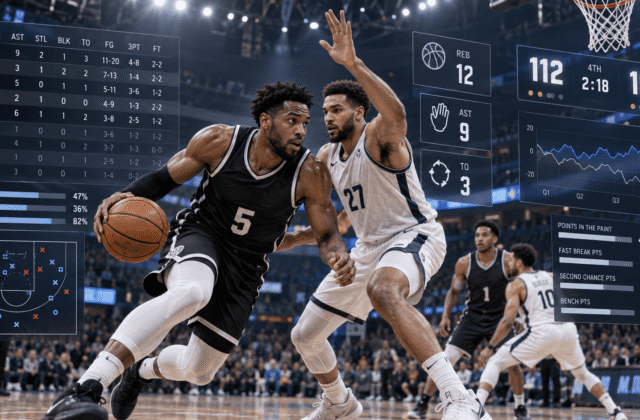
Basketball News — NBA Scores, Games, Trades & Analysis
Basketball moves through several news cycles at the same time. A single night can produce a close finish that changes playoff positioning, an injury that alters a team’s rotation, a trade report that shifts expectations around the league and a breakout performance that forces coaches to reconsider roles. Useful basketball news therefore has to connect scores, player availability, transactions and long-term competition context rather than treating them as separate streams of information.
The Basketball section of SportNews is built as a broad destination for fans following the NBA and the wider global game. NBA coverage forms the core because of the league’s year-round news cycle, but the section should also accommodate the WNBA, college basketball, international competitions and major professional leagues outside North America when the story has wider sporting relevance. The objective is not to publish every box score or rumor independently, but to give readers a coherent view of what is happening, why it matters and where the story is likely to develop next.
During games, readers primarily need live scores, quarter-by-quarter context and immediate updates. Before tipoff, the focus shifts toward injuries, probable lineups, schedules and recent form. After the game, the same audience wants to understand what changed: whether a result affected standings, whether a rotation adjustment worked, whether a player’s performance is part of a larger trend and how the schedule may influence what happens next. SportNews should connect those stages into one basketball ecosystem instead of forcing users to navigate isolated news pages.
Latest Basketball News
The basketball news cycle extends far beyond game nights. Teams continuously manage injuries, rotations, contracts, trades, draft assets and player development, while league decisions and competition formats can create stories that affect multiple franchises at once. A useful breaking-news feed needs editorial hierarchy because an official injury update or completed trade carries substantially more weight than an unverified rumor circulating before a game.
SportNews should prioritize confirmed developments and clearly identify the status of information when a story is still evolving. An official team announcement, a league transaction record, a coach’s pregame statement and a media report about potential trade discussions should not be presented as equivalent evidence. Readers benefit when the article explains what is confirmed, what remains uncertain and why the development matters to the team’s immediate basketball situation.
The main feed should cover significant injuries, roster changes, trades, coaching decisions, suspensions, contract developments, draft-related news and major performances. The emphasis should remain on sporting impact. If a star player is unavailable, the useful question is not merely that the player is out, but how the absence affects usage, defensive assignments, lineup construction and the team’s upcoming schedule.
NBA Scores, Results and Game Coverage
Live scores are one of the most important entry points into basketball coverage, but a number on its own says very little about how a game is developing. Basketball changes quickly through scoring runs, foul trouble, lineup adjustments and pace, so live coverage should help readers understand whether a ten-point lead reflects genuine control or a temporary swing that developed over several possessions.
A strong NBA game page should combine the score with game status, period, remaining time and enough statistical context to explain momentum. Once the game is final, the same page should transition naturally toward the result, key performers, team records and related analysis instead of remaining a static scoreboard.
| Game information | Why it matters |
| Current or final score | Establishes the basic game state |
| Quarter and game clock | Shows how much time remains |
| Team records | Adds season context |
| Quarter-by-quarter scoring | Reveals momentum changes |
| Leading scorers | Identifies offensive impact |
| Rebounds and assists | Adds context beyond points |
| Turnovers | Helps explain lost possessions |
| Team shooting | Shows offensive efficiency |
| Next game | Connects the result to the schedule |
Live statistics are dynamic, so timestamps and update status should remain visible. A basketball news article can discuss the game around those numbers, but the live data layer should remain the current reference for score, period and statistical totals.
NBA News and the Season Story
The NBA produces one of the most continuous news cycles in professional sport because the regular season, trade period, All-Star events, playoff race, postseason and offseason all generate different forms of coverage. The editorial challenge is to keep individual stories connected to the broader season rather than allowing every result or quote to become disconnected content.
During the regular season, context often comes from standings, scheduling and roster health. A team may appear to be declining after several losses while simultaneously playing a difficult road schedule without multiple starters. Another club may produce an impressive winning streak against weaker opposition. Results matter, but the interpretation becomes stronger when strength of schedule, injuries, lineup continuity and underlying performance are considered together.
As the season advances, the meaning of individual games changes. Early-season results reveal tendencies but rarely decide postseason outcomes. Later games can directly influence seeding, play-in positioning or qualification. News coverage should acknowledge that change rather than applying postseason urgency to every game from opening week onward.
NBA Standings and the Playoff Race
NBA standings provide a snapshot of where teams sit, but the table needs context to become useful. A one-game difference can represent a major shift late in the season, while the same margin means very little when most of the schedule remains. Games played, remaining opponents, head-to-head situations and injuries can all influence how a position should be interpreted.
Coverage of the playoff race should therefore avoid reducing the story to current seeding. Readers want to know which teams are moving, which schedules are difficult, where direct matchups remain and whether recent performance appears sustainable. The distinction between automatic playoff positions, play-in implications and elimination scenarios should be made clearly when relevant.
Standings stories should also resist premature conclusions. A team holding a high seed midway through a season is not guaranteed to remain there, and a poor early stretch does not automatically eliminate a club from contention. The most useful analysis identifies what the current position means without pretending that a dynamic competition has already been decided.
NBA Playoffs and Postseason Coverage
The postseason changes basketball strategy because teams face the same opponent repeatedly, rotations become shorter and tactical adjustments carry over from game to game. Regular-season tendencies still matter, but playoff series create a different analytical environment where coaching decisions, matchup targeting and player availability can have disproportionate influence.
SportNews playoff coverage should follow the entire series rather than treating each game as an isolated result. A defensive adjustment introduced in Game 2 may explain an offensive response in Game 3. A player who struggled initially may become more effective after a lineup change. Home-court advantage, foul trouble and minutes distribution can also alter the direction of a series even when the final scores appear similar.
The best postseason coverage therefore combines immediate reporting with cumulative context: series score, previous tactical developments, injuries, rotation changes and what each team needs to solve before the next game. This is more useful than simply labeling every result a turning point.
NBA Trades, Rumors and Roster Moves
Trades generate enormous attention because a single transaction can change the competitive outlook of multiple teams. Yet transaction coverage is also one of the areas where reporting standards matter most. A completed trade, an officially reported agreement, active negotiations and speculative interest are different stages of information and should be described accordingly.
SportNews should distinguish confirmed roster moves from rumors in both headlines and article language. When a deal is completed, analysis should explain what each team receives, what role the incoming players may fill and how the transaction affects roster balance. Contract information, draft compensation and salary implications may be relevant when they materially influence the basketball decision, but the article should avoid false precision when current terms are not publicly confirmed.
Trade analysis becomes particularly valuable when it examines fit rather than reputation. Adding another scorer may improve talent but create problems if the lineup already lacks defense, passing or positional balance. Likewise, a move that looks modest in isolation may solve a specific weakness and improve a rotation significantly. The reader needs the basketball reasoning behind the transaction, not merely the names involved.
Basketball Injuries and Player Availability
Player availability can change a basketball game more dramatically than many pregame statistics because rotations are built around defined roles. Losing a primary ball-handler, rim protector or high-volume scorer affects teammates differently, and several smaller injuries at the same position can be more disruptive than one headline absence.
Injury reporting should remain cautious because status can change quickly. Initial descriptions are often incomplete, return timelines may be revised and players listed as questionable can ultimately play or sit depending on medical evaluation. Articles should identify the source and timing of an update rather than presenting every early report as a definitive diagnosis.
The most valuable coverage explains the basketball consequences. If a starting guard is unavailable, who handles creation? If a center misses time, does the team play smaller? If a player returns under a minutes restriction, how might that affect the second unit? Connecting availability to rotation decisions turns a basic injury update into useful sports reporting.
Player Performances, Statistics and Form
Basketball produces an enormous amount of statistical information, but individual box-score totals rarely tell the entire story. Thirty points can represent an efficient performance that drives a win, or it can come from very high usage in a game where the offense struggles. Rebounds differ in value depending on positioning and opposition, while assist totals do not capture every action that creates an advantage.
SportNews should use statistics as evidence rather than as automatic conclusions. Points, rebounds, assists, steals, blocks and shooting percentages provide the starting point, but the analysis should consider role, minutes, opponent and game state. When more advanced metrics are used, they should clarify the story rather than overwhelm readers with numbers that are not explained.
Recent form requires similar caution. A player producing exceptional numbers across three games may genuinely be improving, but such a small sample can also reflect temporary shooting variance or unusual matchups. Longer trends become more meaningful when the reader can see what changed in role, minutes or team structure.
Teams, Rosters and Rotation Analysis
A team page should operate as more than an archive of headlines. It should connect current stories with schedule, results, standings, roster developments and the players involved, allowing readers to understand how several separate events affect the same franchise.
Rotation analysis is particularly valuable because basketball teams rarely use every available player equally. Coaches change lineups according to injuries, opponent matchups, player form and game situation. A reserve player receiving more minutes after an injury may become an important story even without appearing among the highest scorers, while a starter losing fourth-quarter minutes may indicate a larger tactical change.
The same approach helps explain roster construction. Successful teams generally need complementary roles rather than the maximum number of recognizable names. Ball handling, spacing, perimeter defense, rebounding and rim protection all influence how players fit together, so coverage of roster moves should analyze those relationships instead of evaluating players only through individual statistics.
WNBA and Women’s Basketball
A broad basketball section should include substantial coverage of the women’s game rather than treating it as an occasional secondary feed. The WNBA produces its own competition narratives, player stories, transactions and postseason races, while college and international women’s basketball also generate major events with global audiences.
Coverage should follow the same editorial standards used for the NBA: scores should connect to standings, player performances should be contextualized, injury information should be sourced carefully and transaction stories should explain basketball impact. The structure may differ because schedules, roster rules and competition formats are not identical, but the quality threshold should remain consistent.
Women’s basketball also creates important connections between professional, college and international competition. Player development and national-team events can influence interest across multiple leagues, making entity-based team and player pages especially useful for readers following careers across competitions.
College Basketball and the NCAA
College basketball operates differently from professional leagues because teams change rapidly, schedules vary substantially and tournament qualification introduces a unique postseason structure. Coverage should therefore explain the context behind records and rankings rather than treating them as directly comparable to NBA standings.
During the regular season, conference performance, quality of opposition and tournament résumé become important storylines. As postseason approaches, conference tournaments and NCAA selection scenarios create additional layers of analysis. Readers need to understand not only which teams are winning, but how those results affect seeding and qualification.
The NCAA tournament deserves dedicated coverage when active, including bracket progression, results, major upsets and player performances. Because the competition is elimination-based, individual games carry immediate consequences, but reporting should still avoid describing every surprise result as historically significant without proper context.
International Basketball and Major Global Competitions
Basketball is a global sport, so SportNews should not limit its category to North American leagues. International tournaments, EuroLeague competition, domestic leagues and national teams regularly produce stories involving high-profile players and important developments in the wider game.
International coverage should reflect differences in competition structure and rules rather than assuming every league functions like the NBA. Game length, roster construction, tournament qualification and playing style can vary, and those distinctions often help explain why players have different roles across club and national-team basketball.
Major international tournaments deserve focused landing pages containing fixtures, results, standings or brackets, team news and analysis. Player pages should also connect international appearances with club coverage where relevant, helping readers follow the same athlete across different basketball environments.
Basketball Draft, Prospects and Player Development
Draft coverage becomes valuable when it goes beyond ranking prospects by reputation. A player’s professional outlook depends on role, physical development, shooting, defense, decision-making and team fit, and those factors cannot be reduced to one college scoring average or highlight clip.
Prospect analysis should separate current ability from projected development. A younger player may have greater long-term upside but require significant improvement, while an older prospect may be closer to contributing immediately. Team needs matter as well: the same player can make very different sense for a rebuilding roster and a contender seeking one specific rotation skill.
Once players enter professional basketball, development remains an ongoing story. Changes in minutes, role, efficiency and defensive responsibility can reveal progression that raw season averages obscure. Linking draft profiles to later player coverage creates a more useful long-term archive than treating draft content as disposable after selection night.
Basketball Analysis and Match Context
Basketball analysis should explain observable decisions rather than hide ordinary events behind unnecessary jargon. Pace, spacing, pick-and-roll coverage, switching, transition defense and shot selection are useful concepts when they help the reader understand why one team created advantages or why another struggled to respond.
A game can turn because a coach changes defensive coverage, removes a traditional center, increases ball pressure or targets a specific matchup. Those adjustments are more informative when connected to the score and player roles. Saying that a team “made adjustments” is not enough; useful analysis identifies what actually changed and whether the response succeeded.
Pre-game analysis should remain evidence-based. Recent form, availability, matchup tendencies and scheduling can help explain expectations without pretending the result is predetermined. When the content shifts toward odds, picks or wagering recommendations, that belongs on the dedicated sport-betting property rather than inside the core editorial basketball section.
How SportNews Covers Basketball
The Basketball hub should serve three distinct needs without fragmenting them into unrelated experiences. The first is live utility: scores, schedules and game status. The second is daily reporting: injuries, trades, lineups, results and league developments. The third is analysis: explaining how those events change teams, players and competition narratives.
Freshness matters differently across those layers. Scores and game status require live updates. Injuries and transactions need precise publication or modification timestamps. Standings are dynamic throughout the season. Analytical features can remain relevant longer, but any current statistics used inside them need a clear date or season context.
The basketball category should also remain distinct from SportNews’ other major silos. Football, Basketball and Tennis each receive their own topical depth, while the site-wide Breaking News and Live Scores layers can surface important stories across all three without replacing those dedicated category pages.
Frequently Asked Questions About Basketball News
What basketball coverage is available on SportNews?
The Basketball section covers NBA news, scores, results, standings, trades, injuries and postseason developments, while also allowing coverage of the WNBA, college basketball and major international competitions.
Where can I find NBA scores and results?
NBA games should appear through the basketball score interface and the broader SportNews Live Scores layer. Because scores and game status change continuously, live data should be treated as the current reference.
Does SportNews cover NBA trades and rumors?
Yes. Completed transactions, roster moves and significant trade reports belong in the basketball section, but confirmed deals should be clearly distinguished from discussions and speculation.
How are NBA injuries covered?
Injury updates should identify the timing and source of the information and avoid treating uncertain return estimates as fixed. Coverage should also explain how an absence affects rotation and team strategy.
Does the site cover the NBA playoffs?
Yes. Postseason coverage should include results, series status, player performances and tactical analysis across games rather than treating each playoff result in isolation.
Is basketball coverage limited to the NBA?
No. The NBA is the main traffic and news pillar, but the basketball category can also include WNBA, NCAA, international basketball and other major competitions.
Does SportNews publish basketball betting picks?
Core SportNews basketball coverage remains editorial. Dedicated odds, betting markets, picks and sportsbook content belongs on sport-betting.us.com so that sports journalism and gambling-related content remain clearly separated.
Basketball Coverage from the Score to the Bigger Picture
Basketball creates more information than a scoreboard can capture. A final score establishes who won, but the broader story can involve an injury that changed the rotation, a lineup decision that transformed the fourth quarter, a trade that altered the roster or a result that moved several teams in the playoff race. SportNews should connect those developments so readers can understand both the immediate game and the season around it.
The Basketball hub therefore combines NBA-focused news with scores, standings, transactions, injuries, playoffs and analysis while retaining room for the WNBA, college basketball and major international competition. Live data provides the current game state; journalism explains what that information means. That distinction gives the category enough depth to operate as one of the three major SportNews verticals rather than functioning as a simple collection of basketball headlines.